
Fall in Montgomery County moves fast. One week you’re mowing in shorts, the next you’re raking leaves in a fleece. If your yard isn’t ready before the first hard frost, you’re setting yourself up for a rough spring: dead patches, clogged gutters, and plants that never recover from the cold.
This guide breaks the season down into a clear, month-by-month checklist so nothing slips through the cracks, whether you’re tackling it yourself over a few weekends or handing it off to a crew.
Why Fall Cleanup Matters More Than People Think
A lot of homeowners treat fall cleanup as “just raking leaves.” It’s actually the season that decides how your lawn and landscape look in April. Grass roots are still active underground even after the top growth slows down, which makes September and October the best window all year for lawn repair. Skip it, and you’re stuck patching things up in spring while everything else is trying to grow.
Fall cleanup also protects your property from bigger problems down the line:
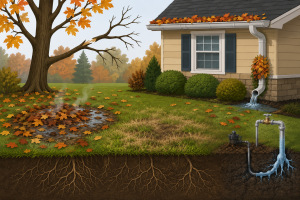
- Wet, matted leaves that smother grass and invite fungal disease like snow mold
- Clogged gutters and downspouts that push water toward your foundation
- Weak or overgrown branches that snow and ice turn into real hazards
- Thin, patchy lawns that lose the fall germination window and stay bare until late spring
- Irrigation lines and outdoor fixtures damaged by the first freeze if they aren’t shut down properly
Your Month-by-Month Fall Checklist
Here’s how the season typically breaks down for Montgomery County properties. You don’t need to follow it to the day, but staying close to this timeline keeps you ahead of the first freeze instead of scrambling after it.
| Month | Priority Tasks |
|---|---|
| September | Aerate and overseed thin lawns, apply fall fertilizer, remove spent summer annuals, check for early leaf drop |
| October | Rake and remove leaves on a regular schedule, prune dead or damaged branches, plant spring bulbs, clean out garden beds, inspect gutters |
| November | Final leaf cleanup, drain and disconnect irrigation lines, apply winter mulch layer, clear gutters completely, winterize equipment and outdoor fixtures |
| Early December | Wrap tender evergreens if hard freezes are forecast, do a final walk-through for storm-damage risks, confirm snow removal plans are in place |
Leaf Removal: Little and Often Beats One Big Push
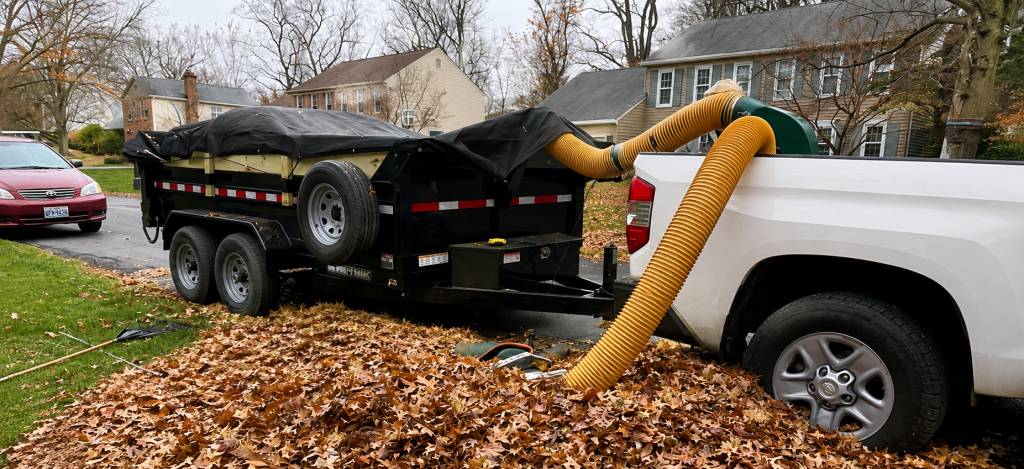
A thick, wet layer of leaves left on grass for even two or three weeks can block sunlight and trap moisture, which invites mold and fungal issues that show up as dead patches once snow melts in spring. The better approach is removing leaves every one to two weeks through October and November rather than waiting for every tree to go bare and doing it all at once.
You have a few options for handling the leaves themselves. Mulching them directly into the lawn with a mower works fine for a thin, dry layer and actually returns nutrients to the soil. Once leaves pile up deeper than an inch or two, though, mulching stops being enough and you’ll need to rake, bag, or blow them clear. Composting is another option if you have the space and want to put that organic material back into garden beds next year.
If you’ve got mature trees and a big lot, leaf removal adds up fast. It’s one of the most common reasons homeowners look into professional seasonal cleanup services rather than fighting it every single weekend.
Lawn Care Before the Ground Freezes
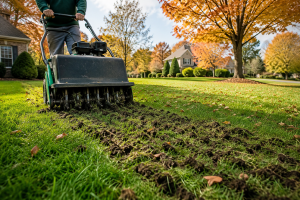
Fall is prime time for three things: aeration, overseeding, and fertilizing. Cool nights and warm soil give grass seed the best germination conditions of the entire year, and fertilizing now builds root strength that pays off the moment growth resumes in spring.
Aeration matters more than most people realize. Montgomery County’s clay-heavy soil compacts easily, and compacted soil chokes off water, air, and nutrients before they ever reach the roots. Pulling small plugs of soil out of the lawn relieves that compaction and gives overseeding a much better shot at actually taking hold.
If your lawn has thin or bare patches from summer heat and drought stress, this is the window to fix it. Waiting until spring means competing with weeds for the same real estate, and cool-season grasses simply germinate better in fall conditions than in the heat of a Maryland spring.
Pruning and Bed Cleanup
Late fall, after leaves drop, is a good time to prune dead, damaged, or overcrowded branches. It’s easier to see the actual structure of trees and shrubs once the canopy is bare, and pruning during dormancy reduces stress on the plant and lowers the risk of disease spreading through fresh cuts.
One common mistake worth avoiding: don’t prune spring-blooming shrubs like azaleas, forsythia, or lilac in the fall. They’ve already set next year’s flower buds, and a fall haircut means cutting off next spring’s blooms. Save those for right after they finish flowering. For anything involving larger limbs, storm-damaged trees, or work near power lines, it’s worth bringing in a tree work crew rather than tackling it with a ladder and a handsaw.
While you’re at it, clear out spent annuals and dying perennials from garden beds. Leaving decayed plant material in place over winter can invite pests and disease that carry into next year, and it also makes spring cleanup that much bigger a job.
Don’t Skip Drainage and Gutters
Clogged gutters are one of the most overlooked fall jobs, and one of the most expensive to ignore. Water that can’t drain properly ends up pooling near your foundation, freezing on walkways, or forming ice dams along your roofline once temperatures drop.
If you’ve noticed standing water in your yard after a heavy rain, or low spots that stay soggy for days, fall is also the right time to address it before winter makes it worse. Persistent drainage issues usually point to a grading problem rather than something a gutter cleaning alone will fix. Our grading and site preparation page walks through how that kind of fix works.
Protecting Trees and Shrubs Going Into Winter
Established trees generally handle Maryland winters just fine, but younger plantings and tender evergreens benefit from a little extra care before the coldest stretch hits. A few things worth doing before December:
- Water deeply before the ground freezes, especially for anything planted within the last year
- Wrap burlap around tender evergreens exposed to harsh winter wind
- Build a mulch ring around the base of young trees to insulate roots and moderate soil temperature
- Add wire guards around trunks if deer or rabbits have been a problem in your yard
Mulching for Winter Protection
Applying a fresh layer of fall mulch does far more than boost your curb appeal. It acts as a critical thermal blanket for your landscape. Winter mulching insulates plant roots against severe freeze-thaw cycles and locks in vital soil moisture during dry winter months. Because winter dieback in shrubs and perennials is frequently caused by dehydration rather than cold temperatures alone, proper fall mulch installation is essential for plant survival.
Winterizing Irrigation and Outdoor Systems
If you run an irrigation system, it needs to be blown out and shut down before the first hard freeze, since water left sitting in the lines will freeze, expand, and crack fittings or pipe. The same goes for garden hoses and any exterior spigots without a frost-proof design. Disconnect hoses, drain them fully, and coil them for storage rather than leaving them attached to the house all winter.
This is also a good time to put away or cover outdoor furniture, store cushions somewhere dry, and take a last look at anything left outside that moisture or freezing temperatures could damage.
DIY Fall Cleanup vs. Hiring a Pro
| Factor | DIY | Professional Service |
|---|---|---|
| Time required | Several weekends across 2 to 3 months | Handled in scheduled visits |
| Equipment needed | Blower, mower, rake, tarps, disposal | Already included |
| Debris disposal | Homeowner’s responsibility | Hauled away as part of service |
| Consistency | Depends on your schedule | Stays on track through the season |
| Best for | Small lots, light tree cover | Larger properties, mature trees, tight schedules |
Neither option is wrong. A smaller yard with a couple of trees is manageable on your own with a decent blower and a free Saturday. A larger property with heavy tree cover usually makes more sense to hand off, especially once you factor in the time spent hauling and disposing of debris.
Common Fall Cleanup Mistakes to Avoid
- Waiting until every leaf has fallen before starting, which lets the first few weeks of buildup smother the grass underneath
- Scalping the lawn on the last mow of the season instead of gradually lowering the height, which stresses the grass going into winter
- Pruning spring-blooming shrubs in the fall and accidentally cutting off next year’s flowers
- Skipping gutter cleaning because “it’s not that bad yet,” then dealing with an ice dam in January
- Piling fresh mulch directly against tree trunks or siding, which traps moisture and invites rot
- Forgetting to drain irrigation lines and hoses before the first freeze
Frequently Asked Questions
When should I start fall cleanup in Montgomery County?
Early to mid-September is a good starting point for aeration, overseeding, and the first round of bed cleanup, since cool nights and warm soil give grass seed the best chance to establish before the ground turns cold. Leaf removal then ramps up steadily through October and November as trees drop, along with pruning, gutter clearing, and winterizing tasks. If you’d rather not track all of this yourself, our seasonal cleanup service covers the full fall timeline from the first aeration visit through the final leaf pickup.
Should I use mulch or decorative stone in my beds heading into winter?
Mulch is generally the better choice for planted beds heading into winter, since it insulates roots and holds moisture through the cold months, while stone is better suited to low-plant areas that don’t need that kind of seasonal protection. If you’re not sure which one fits your yard, our landscaping team can help you figure out the right ground cover for each bed.
What should I do if my yard has standing water after fall rain?
Standing water that lingers for more than a day usually points to a grading issue rather than something raking and leaf removal will solve. It’s worth having the slope and drainage around your property looked at through a grading and site preparation service before winter freeze makes the problem worse.
Do dead or damaged trees need to come down before winter?
Yes, ideally. Dead branches and weak limbs are far more likely to break under the weight of snow and ice, and a bare canopy in late fall makes it much easier to spot the ones that need attention. A tree work assessment before the first snowfall is a smart precaution, especially for anything hanging over a roof, driveway, or power line.
What comes after fall cleanup, do I need to prepare for snow too?
Fall cleanup and winter prep go hand in hand. Once beds are mulched, gutters are clear, and irrigation is shut down, it’s worth lining up snow removal coverage for the season ahead so driveways and walkways stay clear once the first storm hits.
Get Your Yard Ready Before the First Freeze
Fall cleanup is the difference between a yard that bounces back fast in spring and one that starts the season already behind. Our team covers fall cleanup, lawn prep, and drainage work across Montgomery County and the surrounding service areas. Contact us for a free estimate, or give us a call at (240) 620-2749.