
Standing in the garden aisle staring at bags of mulch next to pallets of river rock is a very specific kind of decision paralysis. Both look good in photos. Both claim to be low maintenance. The truth is they act pretty differently once they’re actually down in your beds, and picking the wrong one for a spot usually means redoing the work a year or two later.
Here’s the quick answer:
Mulch is usually the better choice for beds with a lot of plants. It feeds the soil, keeps roots cool, and holds water. Stone works better around foundations, dry creek beds, and spots with few plants where you want something that lasts and doesn’t need yearly refreshing. Plenty of nice yards use both, just in different areas.
Mulch vs. Decorative Stone at a Glance
| Factor | Mulch | Decorative Stone |
|---|---|---|
| Upfront cost | Lower per bag or yard | Higher upfront |
| Long-term cost | Needs replacing every 1 to 2 years | Lasts many years with little replacement |
| Soil health | Breaks down and adds nutrients | Does nothing for soil quality |
| Weed control | Good, especially with fresh layers | Very good when installed with landscape fabric |
| Drainage | Absorbs and holds moisture | Drains fast, doesn’t hold water |
| Heat retention | Stays cooler for plant roots | Can heat up significantly in summer sun |
| Typical lifespan | 1 to 2 years before refresh | 10+ years with occasional top-off |
| Best for | Flower beds, vegetable gardens, planted areas | Foundation borders, dry beds, high-traffic paths |
Why Mulch Still Wins for Planted Beds
If your beds are full of shrubs, flowers, or anything you want to grow well, mulch is a smart pick. It breaks down over time and feeds the soil underneath. It also keeps roots protected from hot summers and cold winters, and it holds moisture so you don’t have to water as much.
Mulch types vary in how they perform:
- Shredded hardwood breaks down fastest, adding the most organic matter to soil
- Pine bark holds color longer and resists compacting, good for sloped beds
- Cedar has natural pest-resistant properties with a scent that fades within a season
- Dyed mulch holds color longest but says nothing about wood quality underneath
Any organic mulch needs a refresh once or twice a year, and should stay a few inches clear of your foundation or siding to avoid trapping moisture against it.
Why Decorative Stone Makes Sense in the Right Spots
Stone is great for areas that need almost no upkeep, like near your foundation, along a dry creek bed, or under a downspout. It drains well and won’t rot, fade, or wash away like mulch can.
- River rock is smooth and rounded, good for dry creek beds and drainage paths
- Pea gravel is small and easy to walk on, a common pick for paths and seating areas
- Crushed stone locks together tighter, so it stays put on slopes
- Lava rock is lightweight and holds its color well, though it can feel sharper underfoot
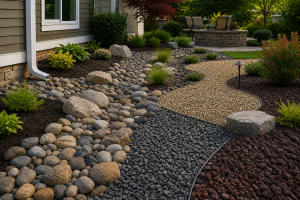
Stone also works well for yards designed to use less water. The downside is that dark stone can get hot in the summer, and it’s more work to change later since it usually sits over a layer of fabric.
The Hybrid Approach: Using Both
A lot of newer yard designs use both materials instead of picking just one for the whole yard. Mulch goes in the planting beds, and stone marks the edges or borders a dry creek bed. Or stone lines a walkway that leads into mulched beds further back. This gives you the benefits of both, and it looks more interesting too. If you’re already thinking about adding a stone border or walkway, it’s worth planning that together with any hardscaping work, since stone choices often connect to patios, walls, or paver borders.
What Soil and Climate Mean for This Decision
Thick, clay heavy soil doesn’t drain fast, which is one more reason mulch tends to be the safer pick for planted beds in this area. It helps keep moisture steady instead of letting water sit around roots. Stone can move surface water away faster, but if water keeps sitting around after rain, that’s usually a grading problem, not something a ground cover switch will fix.
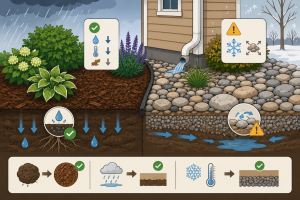
Freezing and thawing can also shift stone over time, especially on a slope, so a solid base layer matters at installation. If drainage keeps coming up as the real issue, our grading and site preparation service can fix that directly.
How It Affects Curb Appeal and Resale
Ground cover has a bigger effect on how your yard looks from the street than most people think. Fresh, dark mulch gives beds an instant clean look that photographs well, which is part of why people use it before selling a home. Stone looks more permanent and low effort, which some buyers like since it means less upkeep. Neither one is really better for resale by itself. It mostly comes down to whether the whole yard looks planned out and tidy.
How Each One Affects the Environment
Mulch breaks down naturally and returns nutrients to the soil over time, which helps plants grow better. It also lets water soak into the ground instead of running off. Stone lasts basically forever and doesn’t give anything back to the soil, but it also doesn’t need replacing as often, so less material gets used over time. Stone can also cause more water to run off the surface compared to mulch, so it’s worth thinking about where that water goes, especially near your foundation or on a sloped yard.
Frequently Asked Questions
Which is cheaper over time, mulch or stone?
Mulch is cheaper upfront but needs yearly or twice-yearly replacement. Stone costs more initially but can last a decade or longer with minimal upkeep, so the long-term cost often evens out or even favors stone if you’re not planning to move or redesign the beds anytime soon.
What’s the best time of year to put down fresh mulch?
Late fall and early spring are both good windows for fresh mulch. A fall application insulates roots through the winter, while a spring layer locks in moisture before the summer heat arrives. Either way, it’s worth pairing a mulch refresh with a broader bed cleanup, which our landscaping team can handle alongside the rest of your yard work.
Can decorative stone actually fix a wet or poorly draining bed?
Stone can help water move across the surface faster than mulch, but it doesn’t solve standing water on its own. If a bed stays soggy for a day or more after rain, that usually points to a grading or slope issue underneath, which is worth having assessed through a grading and site preparation evaluation before choosing a ground cover.
Does mulch attract bugs or termites?
Fresh organic mulch can attract some insects, especially if it’s kept too wet against structures. Keeping mulch pulled back several inches from your foundation and siding, and avoiding piling it too thick, goes a long way toward avoiding this.
Can I combine mulch and stone with a paver walkway or patio border?
Yes, and it’s one of the more popular layout choices right now. A common combination is a paver or stone walkway bordered by mulched planting beds, which gives you a defined, low-maintenance path with softer, greener beds on either side. If you’re planning a walkway or patio alongside your ground cover decision, it’s worth reviewing them together as part of the same hardscaping project rather than as two separate jobs.
Ready to Redo Your Beds?
Whether you’re leaning mulch, stone, or a mix of both, getting the layout and materials right the first time saves you from redoing it in a year. Our team handles ground cover installation for yards across Montgomery County. Check out our landscaping services or get a free estimate and we’ll help you figure out what actually fits your yard.